
Engineering case study
Ohmly.
A SwiftUI toolkit.
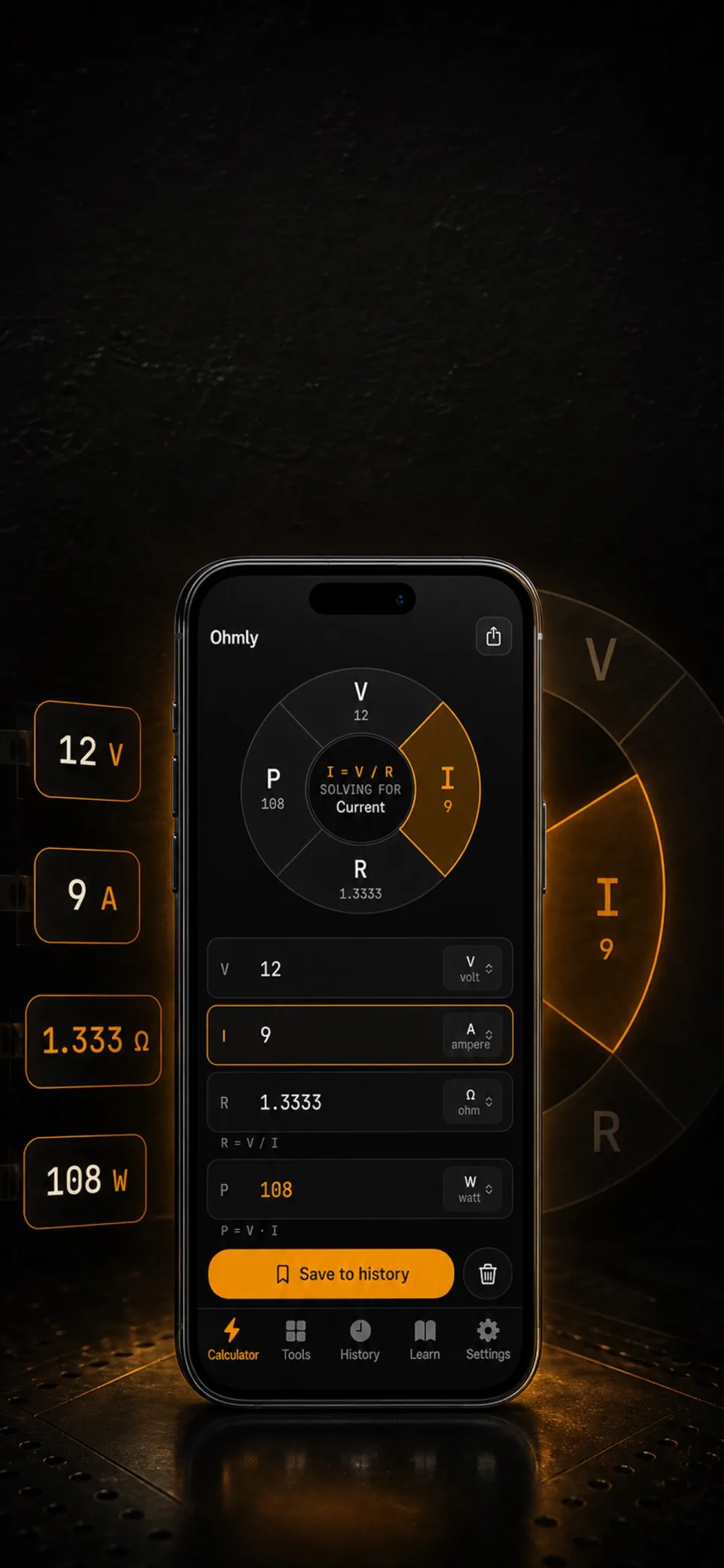
Ohmly turns electrical calculations into a focused native toolkit. Inputs, units, formulas, history, and export are designed as parts of one usable workflow.
The problem
A calculator needs more than a numeric result. It needs meaningful units, clear input rules, and enough context to understand an answer later or share it with someone else.
The architecture
SwiftUI views and view models handle interaction and formatting. Foundation-based engines keep calculation logic separate from the interface. Calculation entries feed history and PDF rendering, while shared storage connects the app with its widget surfaces. StoreKit manages access to paid tools.
Decisions that shape the product
Make the mathematics independently testable.
The expanded tool engines accept numeric inputs and return results without SwiftUI or display formatting. Formula tests can exercise the computation directly.
Preserve the context of an answer.
A calculation entry carries values, units, labels, and the selected tool. PDF rendering uses that record so a report can include the calculation and its formulas together.
Use the right native surface.
The project includes an iPhone interface, Apple Watch app, and widgets. Shared values support quick reference without reproducing the entire phone experience on a smaller display.
How the parts connect
- 01InputValues and selected units
- 02CalculateIsolated numeric engines
- 03KeepStructured calculation history
- 04ShareA native PDF report
Engineering focusTestable domain logic · Unit-aware interfaces · Native PDF generation · Watch and widget integration
Visit Ohmly